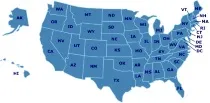
Local & State Resources
local and state resources…
What's Popular
Math Songs
These counting song are available for download. Lyrics can be printed.
Catholic Rubber Stamps
Catholic Rubber Stamps offers rubber stamps, kits, activity ideas, and more.
Catholic Robinson Curriculum Homeschool
This is a homeschool email group for Catholic families which will revolve around the Robinson Curriculum.
Build Your Own Worksheets and Pre-Made Worksheets
Practice your math facts with these worksheets. You will find ready-made worksheets or you can customize your own.
Special Ed: Factory-Like Schooling May Soon Be a Thing of the Past
Britton Manasco, writing for Reason Magazine, looks at the advantages of homeschooling, along with some interesting facets of home education. Discusses the benefits of encouraging independent thought and decentralized learning practices. The article also takes a look at the state of today's classrooms and the limitations of traditional notions of education. There is also a discussion of the use of technology in the homeschool environment and how this relates to the issue of socialization.
The Teaching Home
A Christian magazine for home educators, The Teaching Home magazine was founded in 1980 and provides information, inspiration, and support to homeschooling families and Christian homeschool state and national organizations.
Education is Life
Our entire value system stems from our experiences. The influences of a classroom or a book are minor compared to the plethora of impressions that bombard us constantly. Every teacher knows that by the time a child can sit at a school desk, that child has already received a majority of his education. The child has already developed the attitudes, drives, tendencies and emotions that will shape almost everything else he will do the rest of his life. That education did not come from a book; it came from experiential interaction. All the teacher can do at this point is offer some direction and a suggestion here and there. In fact, teachers take a back seat to the true teachers of life: parents. When a human being is most receptive to influences, then those influences have their greatest impact. A child is an open book which has engraved onto it's impressionable pages the most basic messages - transmitted by the parent.
How to Plan a Successful Field Trip
One of the highlights of homeschooling is a fun field trip. With the flexibility that homeschooling offers, the world is our oyster, right? Why read about something in a book when you can go experience it firsthand. Planning field trips, however, can be stressful. It doesn’t have to be, though. Read through tips that can help you plan successful field trips for your homeschool group.
28 Ways to Teach Beginning Math Without Textbooks
Mary Ellen Carlise shares some creative ways to teach elementary math using items you can find around your home. The focus of this article is mathematics education through second grade.
Living Math
Early exposure to real mathematics in natural settings, without requiring mastery of arithmetic on a set timetable is a key to the ease with which kids attain mastery when the time is right for them. Math literature and history humanizes math, makes it come alive, and provides a context to enjoy and retain learning. This wonderful site offers a literature-based approach to math learning, with book lists, lesson plans, and more.