List of resources for those homeschooling children with special needs.
A look at some of the positive aspects of ADD-ADHD.
Home-Schooled Students with Disabilities and The Reauthorized Individuals with Disabilities Education Act (IDEA). This memo is a clarification whether students with disabilities who are home-schooled would be considered "children in private schools" for the purpose of being provided genuine opportunities for participation in publicly funded programs under IDEA. The conclusion is that a student with disabilities enrolled in a home school would have the same genuine opportunities for participation in IDEA funded programs as a student with disabilities enrolled in an accredited nonpublic school.
Here you'll find the text of the law, along with amendments, articles, general information, and more.
LD OnLine.org is the leading information service in the field of learning disabilities, serving more than 200,000 parents, teachers, and other professionals each month. Launched in 1996, it was the first and is by far the most visited learning disabilities site on the web. LD OnLine features thousands of helpful articles on learning disabilities and ADHD, monthly columns by noted experts in the field, a free and confidential question and answer service, active bulletin boards, and a Yellow Pages referral directory of professionals, schools, and products. LD OnLine is often the first destination for parents and educators seeking information on how to help children and adults with learning disabilities.
Why is it that so many teachers only remember or concentrate on the negative problems that ADD/ADHD kids have? Why do they always seem to recall that many have non-compliant behavior? Whether you are a teacher or a parent of an ADD/ADHD student, please take the time to learn the positive effects of this disorder also.
Video games can play a role in an autistic child's education. Here are some of the therapeutic benefits that can be derived from computer and other games.
Language skills usually evolve naturally in a normal family environment. But what if your child isn't taking to communication as readily as your other kids did? Maybe he isn't talking as much or understanding what he hears. There are fun ways to help kids learn the language skills that come naturally to most people.
This policy paper provides a list of questions that parents and parent organizations can address in an effort to ensure that statewide assessment systems fully and fairly include students with disabilities. In the past, students with disabilities have too often been excluded from large-scale assessments. However, students with disabilities now must be included in state assessment programs with appropriate accommodations, as required by the recent amendments to the Individuals with Disabilities Education Act (IDEA), as well as the Americans with Disabilities Act (ADA), and Section 504 of the Rehabilitation Act of 1973.
Nonverbal Learning Disorder (NLD), also called Nonverbal Learning Disabilities, is a developmental disability that affects children's academic progress as well as their social and emotional development. NVLD encompasses a combination of learning, academic, social and emotional issues. This article looks at factors to consider before choosing to homeschool. It discusses scenarios which may lead the parents of a child with NLD to consider homeschooling, and includes case studies of students with NLD who have been homeschooled for varying periods of time.
Offers BRIGANCE Screening and Inventories products. Designed for use in elementary and middle schools, the CIBS-R is a valuable resource for programs serving students with special needs, and continues to be indispensable in IEP development and program planning.
While some autistic individuals are very artistic and do most of their communicating via painting or drawing, others are less drawn to the typical art activities. For these people we have to be a little more creative and brainstorm a little to find interesting and altered ways of taking part in art. Here are a few ways to help the reluctant autistic person to delve into art.
This article gives some of the benefits of home educating a deaf child, including one-on-one attention, clear communication, and teaching methods that can be adapted to the child's educational needs and learning style.
This group is primarily for blind parents who are interested in alternative parenting styles and issues. This includes atachment parenting, family bed, baby-wearing, gentle disipline, loving guidance, breastfeeding, healthy eating and living, health prevention, nonviolence, nonspanking, unschooling or homeschooling, spirituality, and more.
Another Path is a comprehensive guide to homeschooling for parents who are considering homeschooling, or who have decided to homeschool, a deaf or hard of hearing child.
A message board for parents who are homeschooling special needs children.
 Home Schooling Children with Special Needs (3rd Edition)
 Homeschooling Your Child With Special Needs: Practical Support And Encouragement...
 Home Schooling Children With Special Needs
 Homeschooling, Autism Style: Reset for Success
 Homeschooling the Child with ADD (or Other Special Needs): Your Complete Guide t...
 The Berenstain Bears God Made You Special (Berenstain Bears/Living Lights: A Fai...
 Homeschooling for Children with Special Needs (SEN): A Practical, Compassionate ...



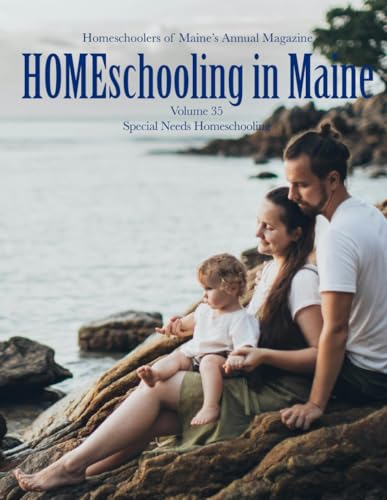
 Homeschooling in Maine: Special Needs Homeschooling
 AI Prompts for Special Needs Homeschooling: ADHD, Dyslexia & Autism Support ...